Client works
kari esports
Client.
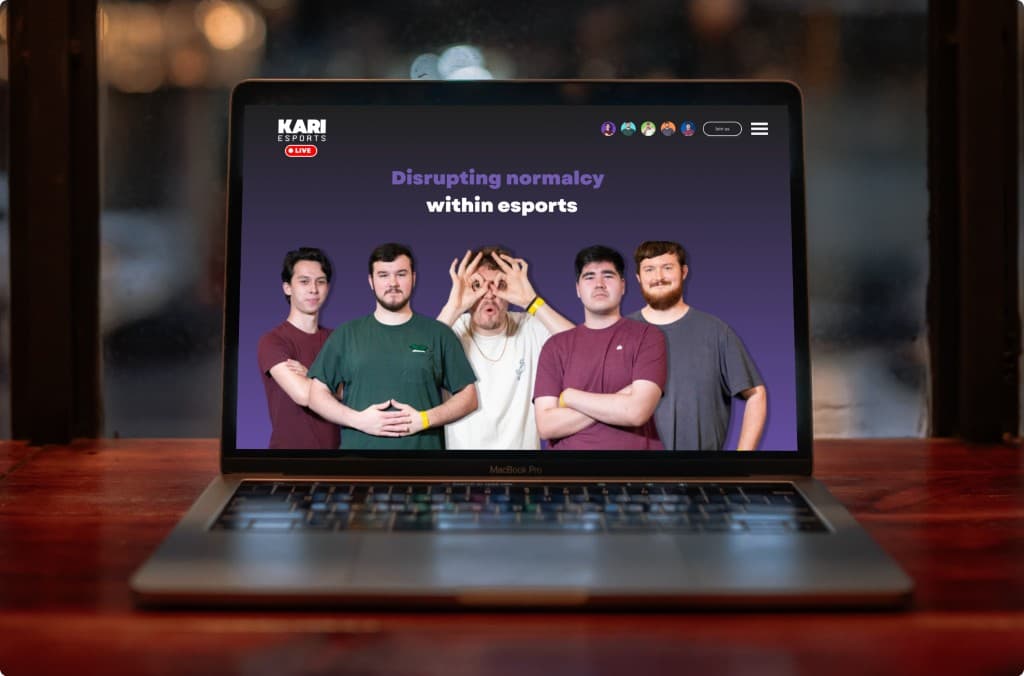
Kari eSports is a competitive esports gaming company. Based out of USA and founded in 2022, they are on a mission to spotlight margalised gamers to give them the platform to showcase their skills and talents within the gaming industry. Through research, strategy, designing and prototyping, we partnered with kariESPORTS, to improve their digital communications and provide them a platform to engage their audience in attracting potential players to the team and also brands and sponsors to help support the team.
Discovery.
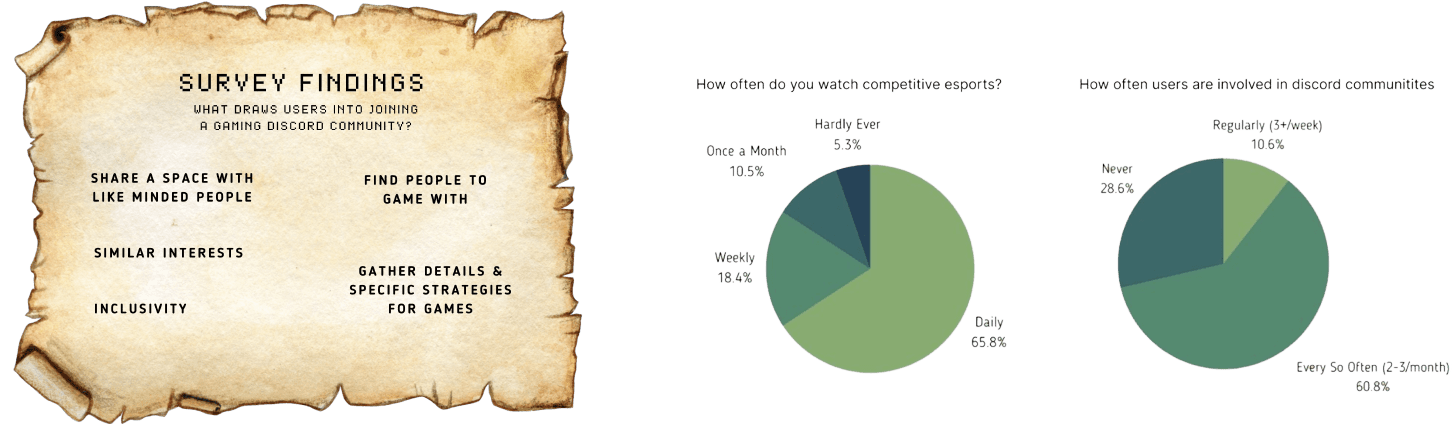
In order to gather a deeper understanding of the brand’s vision and the problems they are currently facing, I facilitated a discovery workshop with the client and my fellow designers. This was the first step in our research to further recognise the industry, organisation and challenges at hand. Once acquired, we strove to gain further knowledge on the user base in surveying and interviewing gamers and also potential brands and sponsors. This meant our data was validated by the target user base in getting to the core of the pain points and challenges faced currently when searching esports websites, but also to find out what they wanted to see in an esports gaming website.
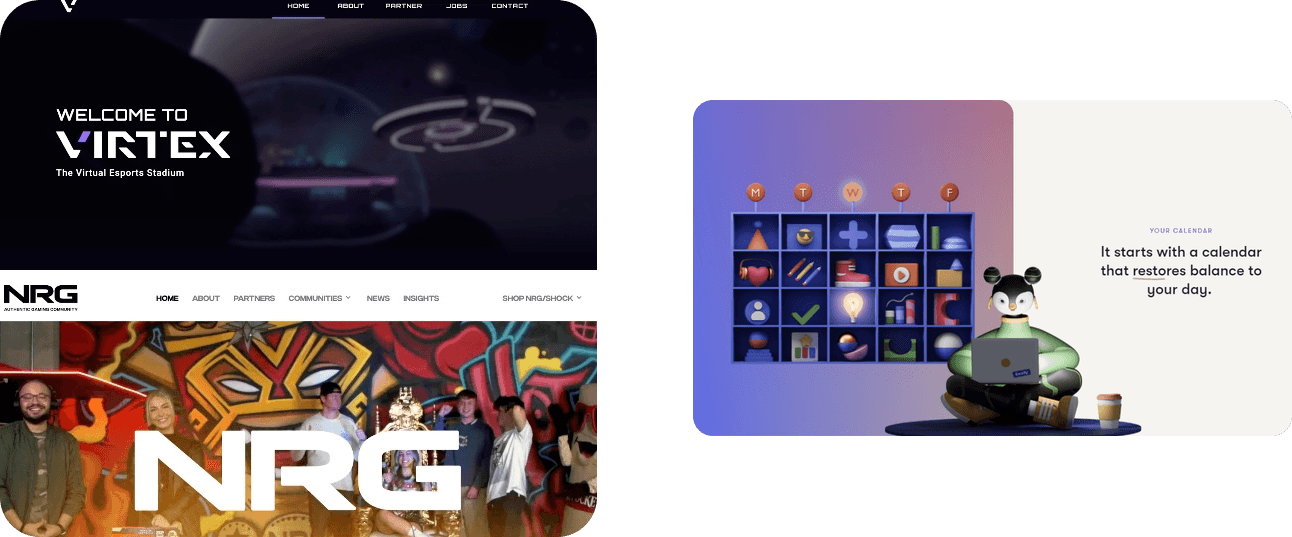
Whilst receiving information from the client to create a website interface that stands out from the market, we wanted to research other competitors in the esports gaming space to see how their websites visually reflected their brand. This allowed us to gather inspiration for later down the design process, to see how to differ the interface for kariESPORTS and to take features that would be appropriate from other websites.
Key takeaways
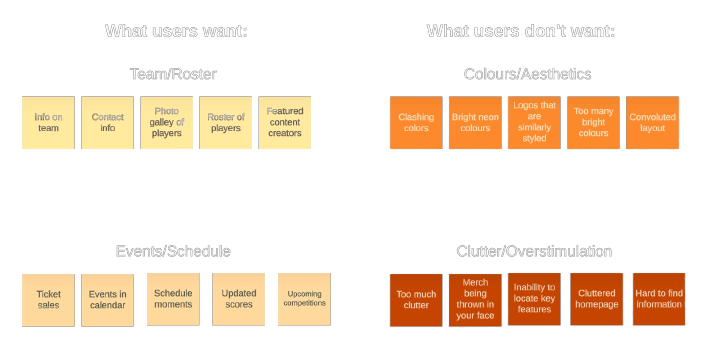
- Users wanted to see player information, including their picture and contact info
- Users wanted to see updated scores and the team’s schedule
- Users wanted to see the description of the team’s game and discord channels
- Users didn’t want to see too many bright colours and neon colours
- Users didn’t want to see an overstimulating design and cluttered information
- Users didn’t want to see merch being thrown in your face when entering the site
Defining.
In order to define the problem at hand into a clear focus, we synthesised our research by collecting all our insights from the client, user research and competitor analysis to see what common trends appeared. This allowed us to visualise the key trends in what users wanted in esports gaming websites.
Problem.
Open and closed card sorting was carried out with the target user group in order to further validate how they understood and categorised the esports gaming information. This would allow us to see how they have grouped together the information, to identify relatable trends.
After understanding the clients requirements and target users feedback surrounding esports gaming websites, we also wanted to deep-dive into the esports industry and the competitors out there, which would allow us to see what features their websites were currently implementing.
It was highly important to create personas, so we could always refer back to who exactly we were going to be designing for, highlighting their goals and frustrations as a user of the website. As you can see, we decided to stay with the gamer theme to represent our two types of user.
Solution.
Once we analysed our results from our card sorting, we then used this to create the information architecture on the website. This allowed us to visualise how our global navigation would look on the interface, with lots of users from our research saying it was confusing to navigate on most esports websites, we wanted to make sure we listened to the users to create a streamlined navigation.
To begin providing our solution, we needed to now take all our research and insights gathered previously, to start ideating to how can we best design the website with all the information we have now acquired.
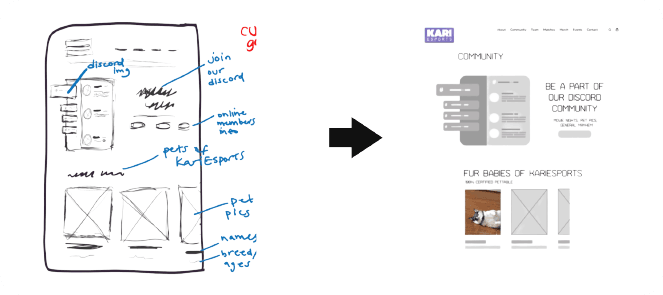
To do this, as UI Lead, I headed up a design workshop with Lizzie and Joyce in order to brain storm as many ideas as possible in lower fidelity to generate ideas together. From here, we were able to optimise the workflow and wireframes from the sketches. A key part of our iteration phase was testing our wireframes with the user group, to ensure they were validated and useful before designing in Figma.
Results.
Usability testing
During the final stage of our design, I implemented some further changes to our high-fidelity prototype to further meet the needs of our users. Due to the restricted time on our project, it meant that these additions weren’t able to be user tested towards the end of the project, so to further validate these functions it is of key importance to test these with the user base to gain a further insight into their effectiveness.
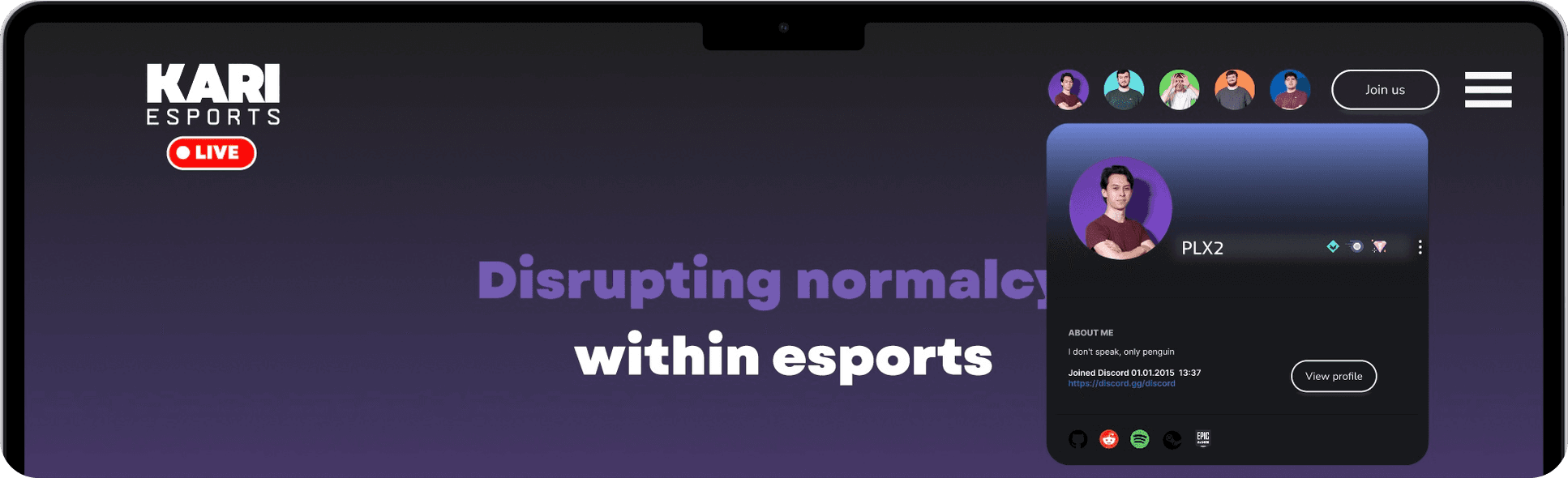
The main function that was changed was moving the navigation from a top global navigation to a hamburger menu to meet the clients’ needs of not having a cluttered interface, to meet both the needs of the users and to make the website stand out from other esports websites. This also allowed the brand/sponsors to get a quick oversight of the players profiles from the landing page.
Challenges and constraints
We encountered a few challenges along the way during this client work, which we had planned contingency time for, but meant creative thinking was required to work around the problem. For our initial user research, we planned to reach out to brands/sponsors of esports gaming teams to really get a deep understanding of their perspective when it comes to their esports website expectations. Unfortunately, however, we were only able to interview two brand/sponsors due to a lack of time which meant our data was limited.
So as our next steps, we want to further interview brands/sponsors to really hone in on the pain points the users come across when visiting an esports website. Another challenge we came across was to really stay on brand with the interface design by keeping it minimalist, simplistic and modern, whilst not looking like a typical esports gaming website. At the same time, we needed the website to appeal to brands/sponsors for the team and players. So it was a balancing act to incorporate the business needs and the users’ needs, ensuring every decision was related to our mission and our brief.
Client successes
Working collaboratively in order to successfully meet the needs of the client, in creating a website to attract her target audience whilst emphasising the unique mission statement. Showcasing the newly designed website to the client resulted in fantastic feedback, further emulating the success of the work in achieving its goal.
As a team of UX Designers, balancing each others’ strengths and weaknesses to successfully