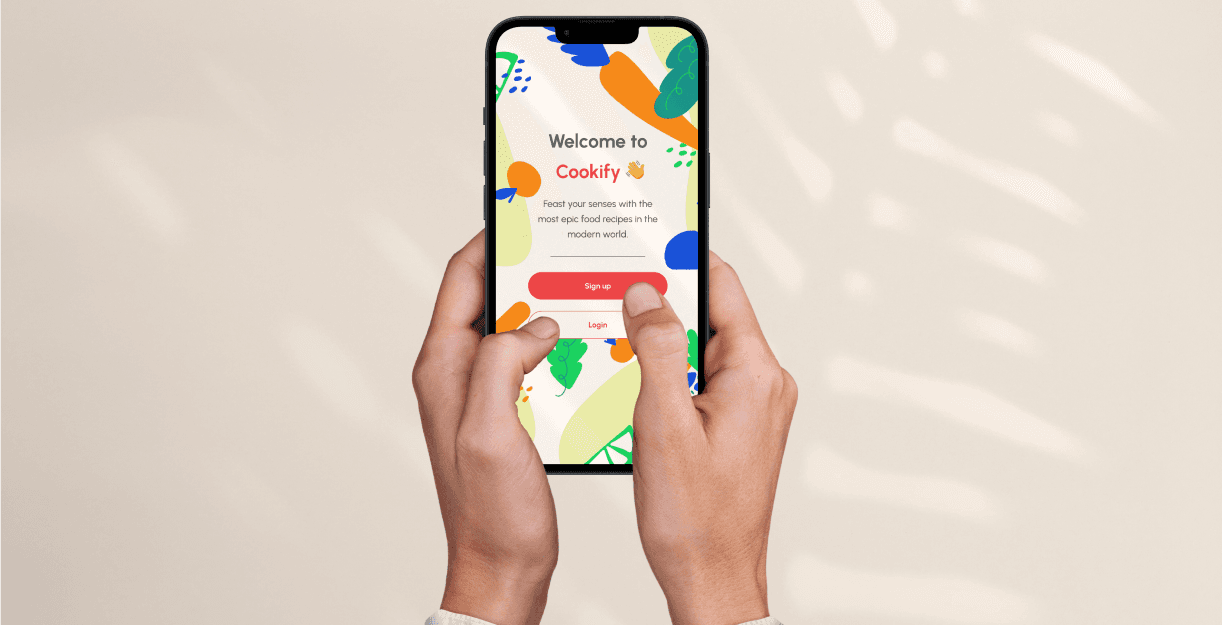
Client works
cookify
Client.
Working with a client to provide mobile designs for his start-up business, which was an iOS food recipe application aimed at millennials. This start-up was in the early stages, wanting to further understand about the target users and then translate those requirements and insights into designs, which is where I stepped in.
Discovery.
The first step was understanding the requirements and what vision the client had for the brand. In order to do this we had a kick-off stakeholder meeting between the client, the developer and myself to ensure we were all on the same page about expectations and feasibility. This allowed us to all create a product roadmap and allowed me to ask smart questions to uncover the project goals, to generate user-centred designs within two months.
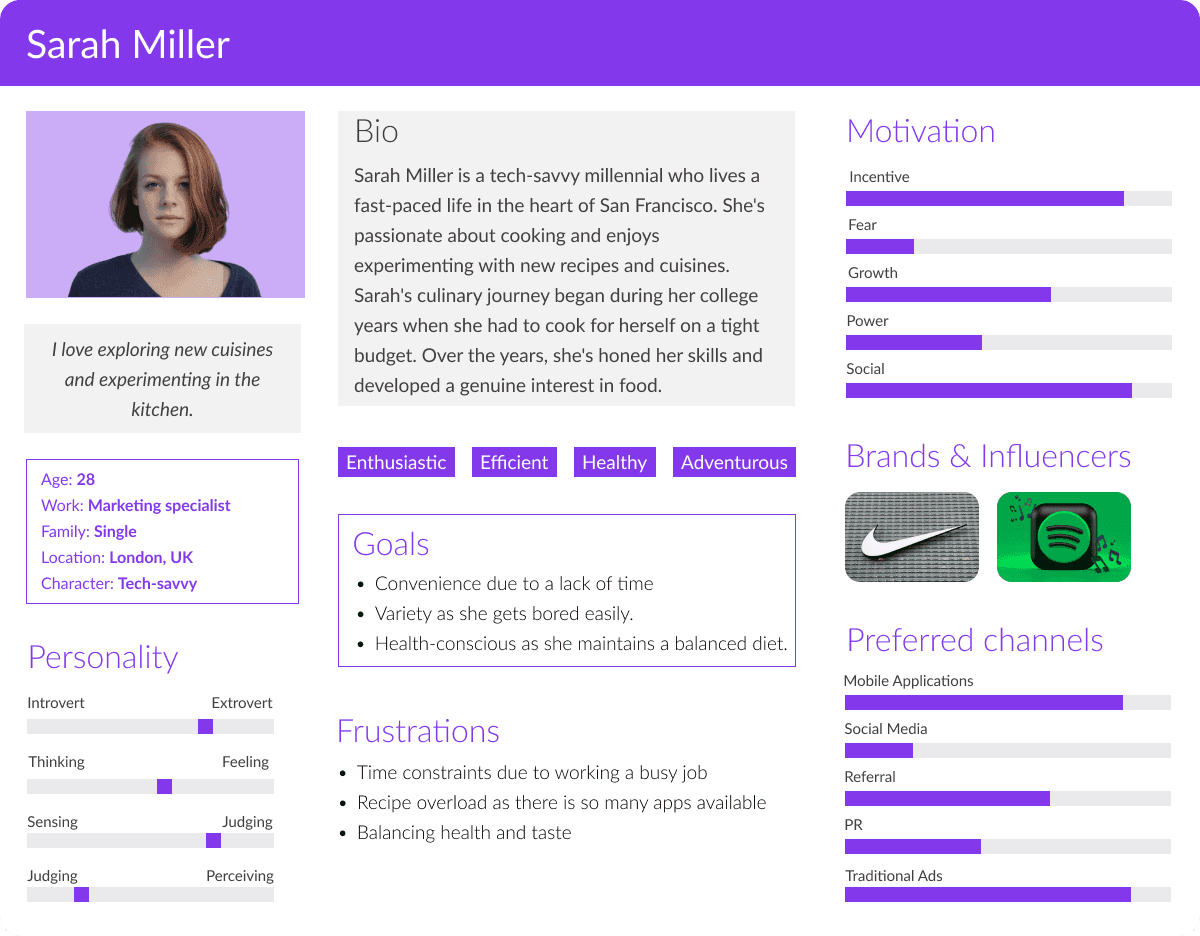
After collecting the recordings from the user interviews, I started by creating a user persona of a millennial who enjoys experimenting with food serves a critical purpose in the design process. By crafting this persona, collectively we gained validation and valuable insights into the user (Sarah’s) needs, preferences, and pain points when it comes to using a food-related application. This deeper understanding allows us to design a more user-centric and effective app.
In order to narrow the scope and categorise findings, I conducted affinity mapping to synthesise the pains identified. I grouped these problems under common themes and features in the platform. From here we got some key takeaways about the users expectations and current challenges, which we can then classify accordingly. We categorised the key areas so we could implement them into our designs later in the process.
Defining.
By creating a user journey map, I could start narrowing the scope and defining the key areas of opportunity. This helped us visualize and understand the entire user experience from her perspective. By mapping out Sarah’s journey, we gain a comprehensive view of her interactions with our food-related application, from her initial point of entry to her ongoing engagement. This process allows us to identify pain points, moments of delight, and critical touchpoints where we can enhance her experience. From this, we can clearly see where she gets frustrated and impatient when researching and ordering.
Problem.
“Millennials are challenged to balance time constraints, recipe overload, and the pursuit of health and taste in their meals, necessitating a food recipe mobile app to simplify and optimise their choices when browsing recipes.”
Based on the above problems identified, I worked towards addressing these pains by coming up with potential solutions:
- Allowing users to sign up/login for personalisation and scalability
- Offering cuisine variety through eye-catching images of recipes
- Including necessary nutritional/dietary information
- Offering information regarding health and difficulty level for recipes
Solution.
“Our solution is to develop and design a food recipe app tailored to the preferences of millennials. This app will seamlessly blend convenience and culinary diversity, enabling users to effortlessly exchange and explore recipes while ensuring an exceptional user experience.”
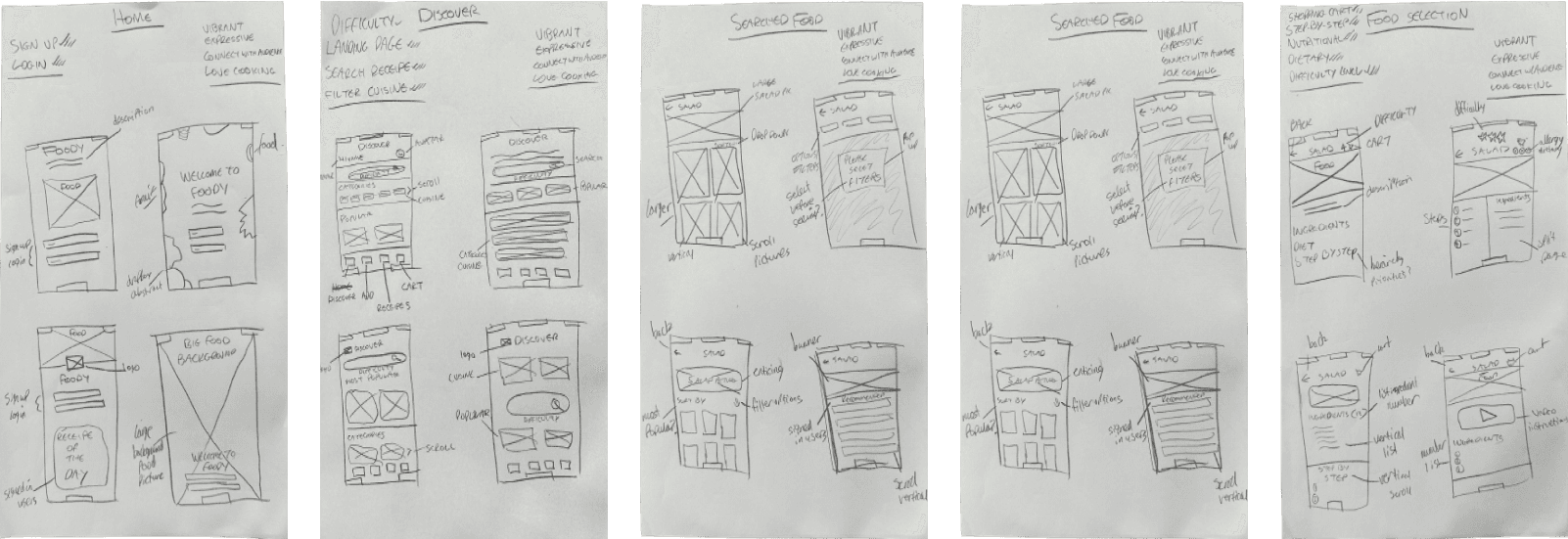
I rapidly created preliminary wireframes to solicit input from the client, developer and users regarding the general design and architecture of the applications flow. This allowed for defining a consistent visual structure and layout for the upcoming high-fidelity designs.
Results.

Usability testing
I facilitated usability testing sessions with our core user base to confirm if the updated designs effectively addressed their needs. I crafted a script that included a scenario where users were tasked with browsing for their recipe of preference and then adding a food recipe item to their cart, which was a fundamental feature of the app.
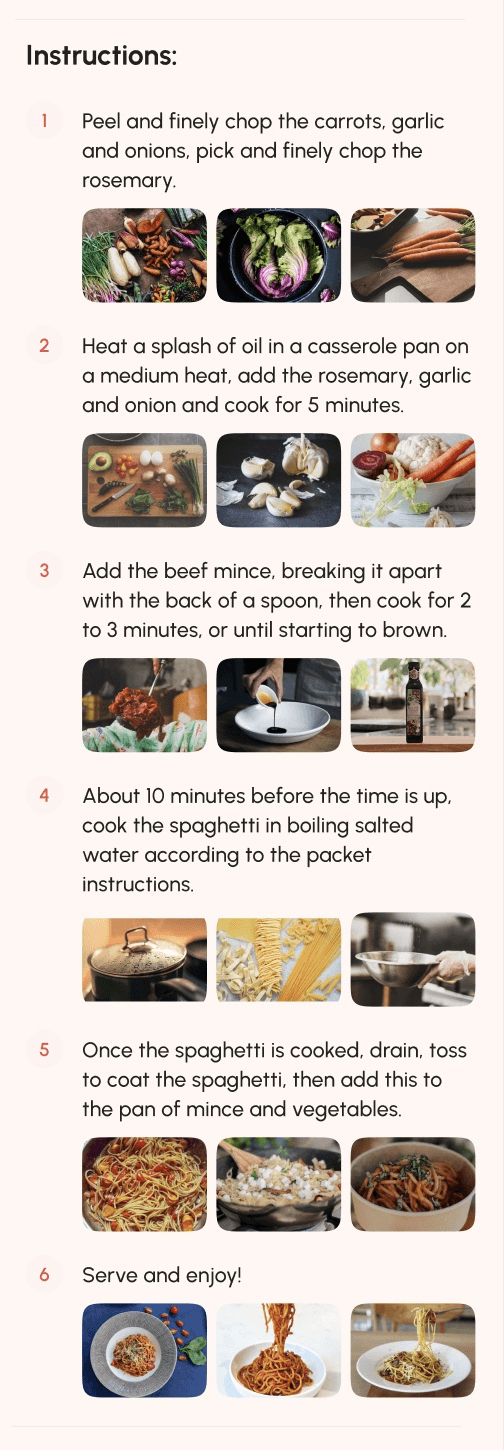
Throughout the session, I closely observed their interactions with the prototype as they configured the flow. The usability tests demonstrated that the users wanted to see more practical visuals of the step-by-step instructions to help them create the recipe. Users also wanted to see a combination of text and imagery on the ingredients to bring it to life more as they felt it connected with them better.
Validating the designs
Since implementing the visual imagery on instructions and ingredients, we witnessed a notable increase in the understanding and engagement of the specific recipes. Furthermore, I’ve received positive feedback from users regarding the streamlined browsing process for them searching recipes, resulting in substantial time savings.
Key takeaways
Here are some key insights obtained from this project:
- Engaging developer input from the outset of the project. Early collaboration with the developer and client helped mitigate the need for extensive revisions later on. Understanding technical constraints upfront informs your design approach.
- User testing remains an ongoing process even through development. Design continually evolves to enhance the user experience. It’s crucial to consistently gather and heed user feedback.
- Building out a Cookify design system to ensure consistency, efficiency, accessibility and scalability. It will product development through reusable components, maintains a cohesive brand identity, and improving user experience by incorporating best practices.
Challenges and constraints
As the client wanted to start designing straight away, one of the most significant challenges, under time constraints was securing time from users to gather insights and information to make sure it was user-centred design. To address this, I place great importance on the meeting time, ensuring thorough preparation so that I can leave with all the necessary information and agreed-upon next steps. Efficiently managing this time is crucial, as it emphasizes the value of conversations with specialists and helps us tap into the best insights from our user base, which ultimately guide our design decisions.
Another challenge involves maintaining focus on feature prioritization while considering broader factors and staying aligned with our objectives. We received an abundance of feedback within a short timeframe, particularly when implementing specific features. However, our priority was to deliver the Minimum Viable Product (MVP) within two months, with the most relevant functionalities first, all while ensuring scalability through the design system.